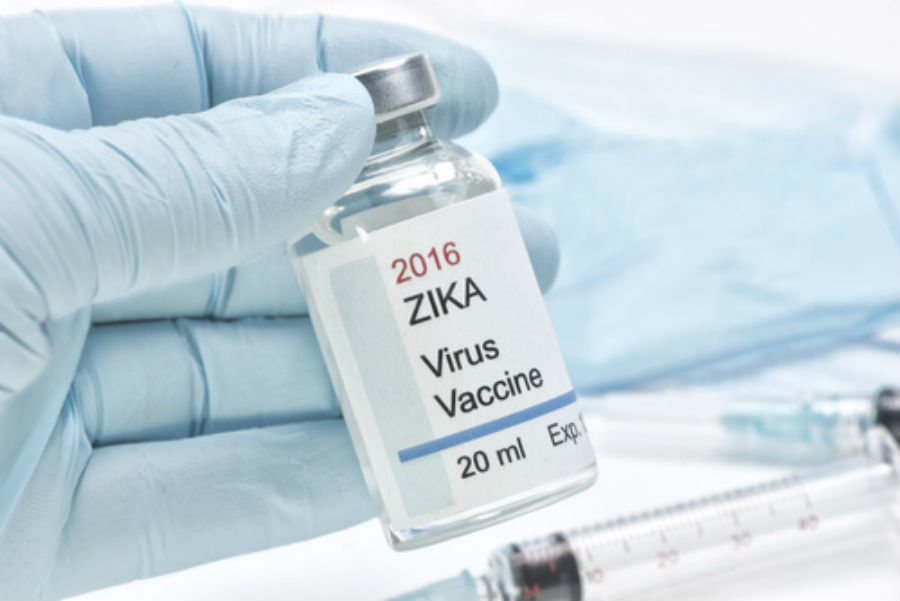
There is no vaccine or medicine for Zika.The finding was published in the journal PLOS Neglected Tropical Diseases. "The ZIKA VLP vaccine offers an effective and safe strategy to create a prophylactic vaccine that protects against Zika Infection as well as its serious effects such as microcephaly," said Jose M Galarza, TechnoVax CEO.Zika is spread mostly by the bite of an infected Aedes species mosquito. It can be passed from a pregnant woman to her fetus.Infection during pregnancy can cause certain birth defects . NEW YORK: Scientists have developed a potential Zika virus vaccine that may offer safe and effective protection against the infection as well as its serious effects such as microcephaly Microcephaly is a birth defect where a baby's head is smaller than expected when compared to those of the same sex and age.Preclinical results by scientists at City College of New York (CCNY) and biotechnology developer TechnoVax in animal models demonstrate favourable outcomes in developing a vaccine against the mosquito-borne Zika virus.The virus-like particle (VLP) vaccine tested in animals were highly effective in eliciting protective antibodies with neutralising activity equivalent to or higher than the activity present in the serum of a patient who recovered from Zika infection.The vaccine formulations also were well tolerated and safe, said researchers Paul Gottlieb and Linda Spatz, from City University of New York (CUNY).
'Groundbreaking strides' made in Zika vaccine research - News9.com - Oklahoma City, OK - News, Weather, Video and Sports
Epidemiology expert Oscar Alleyne agreed that vaccine development appears promising, but that people should not assume a Zika vaccine that works in animals will automatically work in humans. Development of a Zika vaccine is proceeding rapidly, but it still will be years before such a vaccine is available to the public, says the author of a new report on research efforts. "The pace of R&D for a Zika vaccine is incredibly brisk," Thomas said. Changes in your hair -- whether it's graying hair or hair loss -- are a bane of aging. U.S. women traveling to areas where the Zika virus is circulating might be less likely to be infected than expected, but risk remains, a new study suggests.collected by :Lucy William